Illuminating Innovation: Custom Smart Glass Solutions for Tesla and Luxury Vehicles
The automotive industry is undergoing its most significant transformation since the advent of the assembly line. While much of the conversation revolves around electrification and autonomous driving, a quieter revolution is taking place inside the vehicle cabin. In the premium automotive segment—specifically for manufacturers like Tesla, Mercedes-Maybach, BMW, and Range Rover—the focus has shifted from mere transportation to the "experience of travel."
At the heart of this evolution lies Smart Glass Technology. Once a futuristic novelty, intelligent glazing has become a defining feature of the modern luxury vehicle. This article provides a deep technical dive into the world of custom smart glass solutions, exploring the underlying technologies, their integration into Tesla and other high-end models, and the future of the transparent surfaces that surround us.
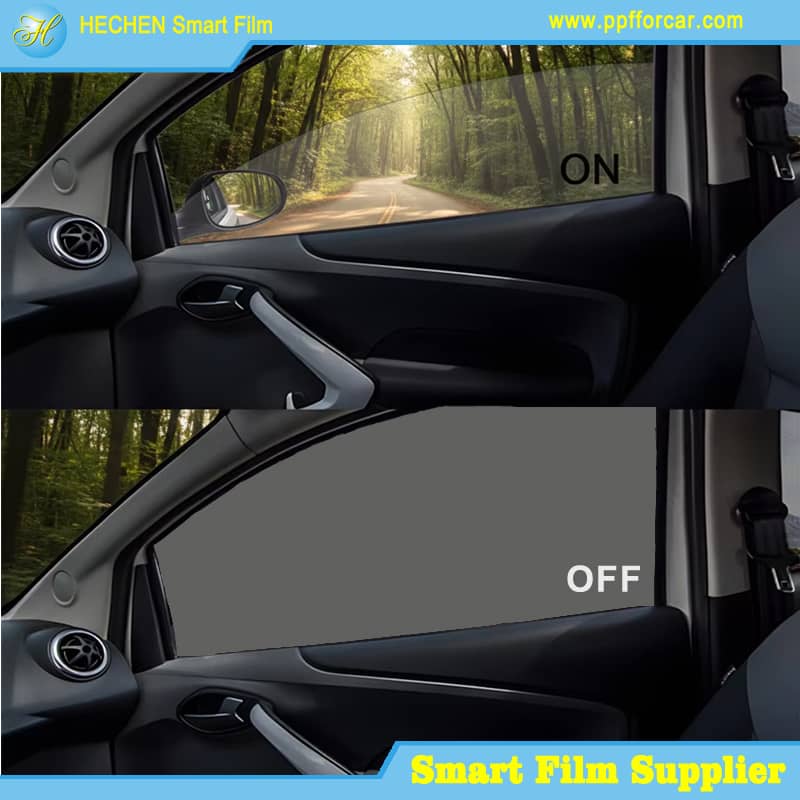
1. The Technical Landscape: How Smart Glass Works
Before examining specific applications, it is crucial to understand the three primary technologies currently vying for dominance in the automotive sector. Each offers distinct advantages and operates on different physical principles.
a) Suspended Particle Device (SPD)
SPD technology is currently the most common solution found in high-end vehicles, including the Tesla Model S and Model X.
The Mechanics: A thin film laminate is sandwiched between layers of glass or plastic. This film contains millions of microscopic rod-like particles suspended in a liquid emulsion. When no voltage is applied, these particles move randomly, blocking light. When an electric current is applied, the particles align, allowing light to pass through.
The User Experience: SPD offers a seamless transition from clear to dark. Crucially, it allows for variable tint levels, not just binary states (on/off). It is exceptionally effective at blocking glare and infrared radiation.
Automotive Application: Ideal for large panoramic roofs where heat rejection is paramount.
b) Polymer Dispersed Liquid Crystal (PDLC)
Often referred to as "privacy glass," PDLC is frequently used for partition windows in luxury sedans like the Mercedes-Maybach S-Class.
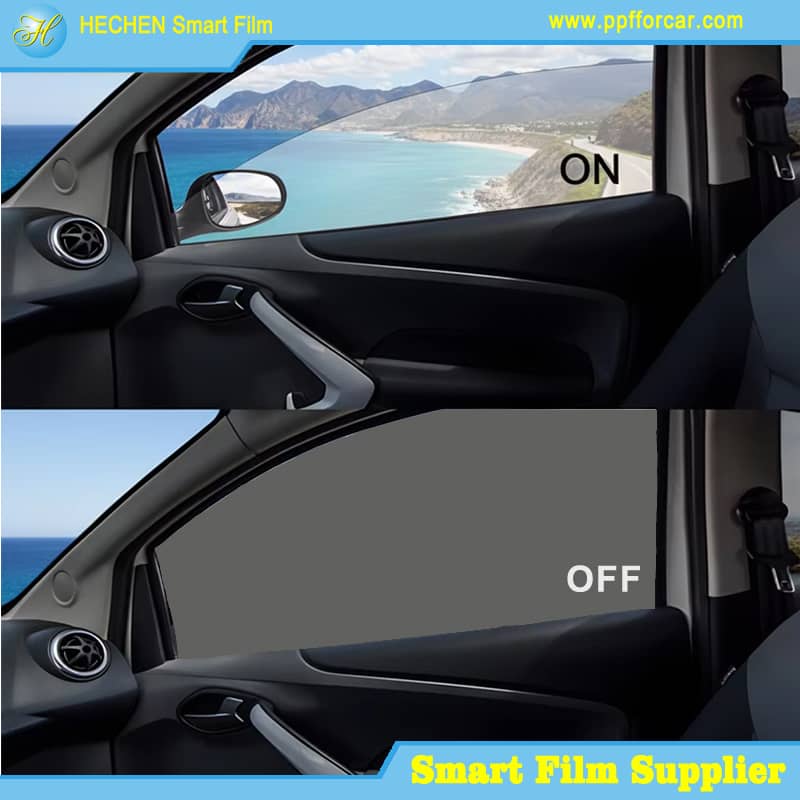
The Mechanics: Liquid crystals are dispersed within a polymer matrix. In its "off" state, the crystals scatter light, making the glass appear translucent (milky white). When voltage is applied, the crystals align, and the glass becomes instantly transparent.
The User Experience: PDLC switches instantly but primarily offers two states: opaque and clear. It does not typically offer graduated tinting for heat control as effectively as SPD.
Automotive Application: Perfect for creating on-demand privacy between the driver and rear passengers, or for concealing storage areas.
c) Electrochromic (EC) Glass
Used in the Mercedes-Benz SL convertible’s panoramic roof (Magic Sky Control) and high-end rearview mirrors.
The Mechanics: EC glass uses a chemical reaction. A low-voltage electrical charge causes lithium ions and electrons to transfer from a counter electrode layer into an electrochromic layer, changing the material's optical properties. The glass darkens from the edges inward.
The User Experience: EC glass changes very smoothly and requires power only to change state, not to maintain it (voltage-off memory). However, the transition speed is generally slower than SPD.
Automotive Application: Sunroofs and architectural skylights.
2. Tesla’s Integration: The Paradigm of Glass
Tesla has been the primary catalyst for bringing smart glass into the mainstream. The company's philosophy of minimalism and structural battery packs necessitated a different approach to cabin architecture.
The "Glass Roof" Architecture
The Tesla Model S (2021+ Refresh), Model X, and Model Y feature monolithic glass roofs that extend from the front windshield header to the rear hatch. This design provides headroom, a sense of openness, and structural rigidity. However, it presents significant thermal management challenges.
The Solution: Tesla utilizes a custom-tuned SPD smart glass for these roofs.
Infrared Rejection: Tesla's proprietary tint layer, combined with SPD, achieves a near-total rejection of infrared light (up to 98% on the new Model S Plaid).
UV Protection: The glass blocks over 99.5% of UV rays, protecting the interior vegan leather upholstery from fading and the occupants from skin damage.
Integration with UI: Tesla’s approach is technically sophisticated in its simplicity. The tint control is not a physical button but a slider within the main infotainment display. This digital integration allows for over-the-air updates that can refine the voltage curves and tint algorithms long after the car has left the factory.
Challenges in Tesla Integration
While visually stunning, Tesla's reliance on massive glass surfaces required a custom engineering approach to smart glass:
Curvature: The Model Y roof, for instance, requires significant bending of the glass. Integrating the SPD film evenly across a complex 3D curve without optical distortion is a manufacturing challenge that requires precision lamination.
Weight vs. Strength: Glass is heavy. Tesla uses a tempered glass composite that is structurally rated to withstand rollovers. Adding the SPD/PDLC layer increases weight, requiring careful engineering of the vehicle's center of gravity.
3. Beyond Tesla: Ultra-Luxury Customization
While Tesla focuses on minimalism, legacy luxury brands like Mercedes-Benz, BMW, and Rolls-Royce use smart glass to enhance bespoke craftsmanship and passenger isolation.
The "Clairvoyant" Partition in Mercedes-Maybach
The Mercedes-Maybach S-Class offers an optional rear-seat entertainment package that integrates a large, electrically switchable PDLC glass partition.
The Custom Solution: Unlike a standard sedan, this partition separates the driver from the rear passenger.
Acoustic Integration: The PDLC glass is laminated with acoustic PVB (polyvinyl butyral) layers, creating a "library-like" silence in the rear. When the glass is in its translucent (opaque) state, it provides privacy; when clear, it allows communication with the front.
Integration with Electronics: The glass must be perfectly transparent to allow the view of the 31-speaker Burmester 4D sound system’s speaker grilles and the large rear display, requiring extremely high optical clarity in the "clear" state.
The "Starlight" Roof in Rolls-Royce Spectre
The all-electric Rolls-Royce Spectre elevates smart glass to an art form. It features a "Starlight Doors" concept combined with a panoramic roof.
The Custom Solution: The glass roof incorporates thousands of fiber-optic lights mimicking stars. When layered with smart glass, the LEDs must be embedded within the laminate in a way that the electrical connections of the smart film do not interfere with the optical fibers.
Theater Mode: Passengers can press a button to darken the roof instantly to watch a movie on the rear screens without glare, while the "starlight" effect remains visible through the tinted glass, creating a unique ambiance.
4. Technical Benefits: Comfort, Efficiency, and Security
From an engineering standpoint, implementing custom smart glass is not just about aesthetics; it is a critical component of vehicle thermal management and structural integrity.
Thermal Management (HVAC Efficiency)
Electric vehicles (EVs) are particularly sensitive to HVAC load. Running the air conditioning to cool a cabin heated by the sun can drain significant range.
The Data: In a traditional vehicle with fabric headliners, solar heat enters through the glass and is trapped. With SPD smart glass in its darkest state (typically 1% VLT - Visible Light Transmission), the majority of solar energy is reflected or absorbed before it enters the cabin.
The Result: This reduces the initial "soak" temperature and maintains cabin comfort with lower fan speeds. For a Tesla Model S, this can translate to a range saving of up to 5-10% on a hot day compared to a non-tinted glass roof.
Glare Reduction and Driver Safety
Standard tinted glass provides a fixed level of shade. Smart glass provides dynamic control.
Night Driving: The ability to keep the roof clear at night allows passengers to enjoy a starlit view without compromising the driver's vision via internal reflections.
Day Driving: Automating the tint based on the sun's position (using GPS and solar sensors) can reduce driver fatigue by eliminating blinding hotspots on the dashboard or side glass.
Security and Privacy
In luxury vehicles, the ability to obscure the contents of the cabin is a significant security feature. With PDLC technology in side windows or quarter panels, high-value items left in the car can be hidden from view at the touch of a button, eliminating the need for physical roller blinds that break down over time.
5. Implementation Considerations for Custom Integrations
For those looking to retrofit or develop custom smart glass solutions for these vehicles, several technical parameters must be considered:
Power Consumption and Voltage
SPD: Requires a constant low-voltage AC current (typically 110V) to maintain the clear state. Inverters are needed to convert the car's 12V DC to the required voltage.
PDLC: Operates on lower voltage AC (65V) but also requires an inverter. However, it only draws power in the clear state.
Custom Installations: Third-party installers must source high-quality inverters that do not produce electromagnetic interference (EMI) that could disrupt the vehicle's sensitive CAN bus systems or audio equipment.
Durability and Lamination
Automotive glass must withstand extreme thermal cycling (-30°C to +85°C), vibration, and impact (stones, hail).
The Process: Smart glass for automotive use must be manufactured as a laminated composite: Glass / Adhesive / Smart Film / Adhesive / Glass. The adhesive layers must be optically clear and free of bubbles, as any imperfection will be magnified by the high-resolution displays inside modern cars.
UV Blocking: While the smart film itself is sensitive to UV, the outer layers of glass and the PVB interlayers must block UV to prevent degradation of the film over time.
6. The Future: Next-Generation Automotive Glazing
The next decade will see smart glass evolve from a luxury option to a standard safety and convenience feature.
The "Digital Ceiling"
As 5G and V2X (Vehicle-to-Everything) communication become standard, the glass roof will become a digital interface.
Augmented Reality: Using transparent OLED (organic light-emitting diode) displays embedded within the smart glass, information such as hotel names, points of interest, or navigation arrows could be projected directly onto the glass roof for rear passengers, while the rest of the glass remains tinted for comfort.
Electrochromic Micromirrors
Future iterations of EC glass may use micromirror technology to not only tint the glass but selectively redirect sunlight to solar panels integrated into the roof or dashboard, harvesting energy while keeping the cabin cool.
Self-Healing and Structural
Research is ongoing into interlayers that can heal minor scratches (useful for robotaxis where glass surfaces are touched constantly) and ultra-thin, lightweight glass that can replace sheet metal entirely, turning the entire body of a luxury sedan into a controllable light valve.
Conclusion
Custom smart glass solutions represent the convergence of material science, electrical engineering, and user experience design. In Tesla vehicles, they solve the practical problem of thermal management in a glasshouse cabin while reinforcing a futuristic brand identity. In ultra-luxury models from Mercedes-Benz and Rolls-Royce, they enhance the intangible feeling of sanctuary and personal space.
As the technology matures, the cost will decrease, and the capabilities will expand. The windows of a vehicle are no longer just barriers to the elements; they are dynamic interfaces that actively manage energy, information, and atmosphere, defining the next generation of premium mobility.
For more about the illuminating innovation: custom smart glass solutions for tesla and luxury vehicles, you can pay a visit to Hechen PDLC Smart Film Manufacturers for more info.


评论
发表评论