PDLC Automotive: Revolutionizing Vehicle Glass with Smart Tinting Technology
The automotive industry stands at the precipice of a transformative shift in vehicle design, where glass surfaces are evolving from passive transparent barriers into intelligent, adaptive interfaces that enhance comfort, privacy, and energy efficiency. At the heart of this revolution lies PDLC automotive technology—polymer dispersed liquid crystal films specifically engineered to meet the demanding requirements of vehicle applications. As premium vehicle manufacturers increasingly adopt smart glass solutions and electric vehicle designers seek innovative ways to extend range through reduced HVAC loads, PDLC technology has emerged as a critical enabler of next-generation vehicle architecture. This comprehensive article explores the science behind PDLC films, their expanding applications in modern vehicles, market dynamics, technological advancements, and the future trajectory of this transformative automotive technology.
Understanding PDLC Technology in the Automotive Context
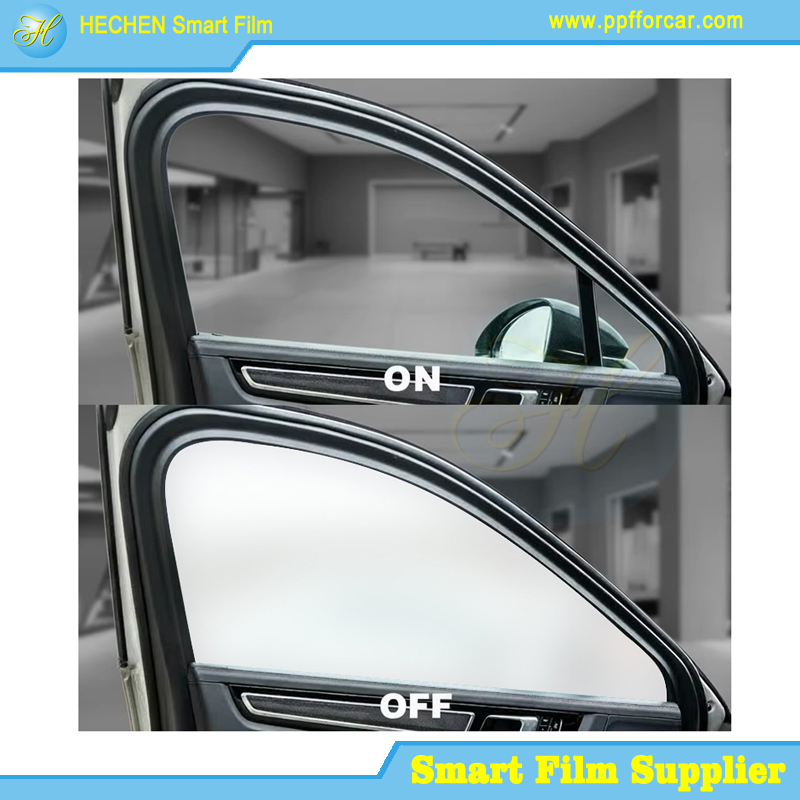
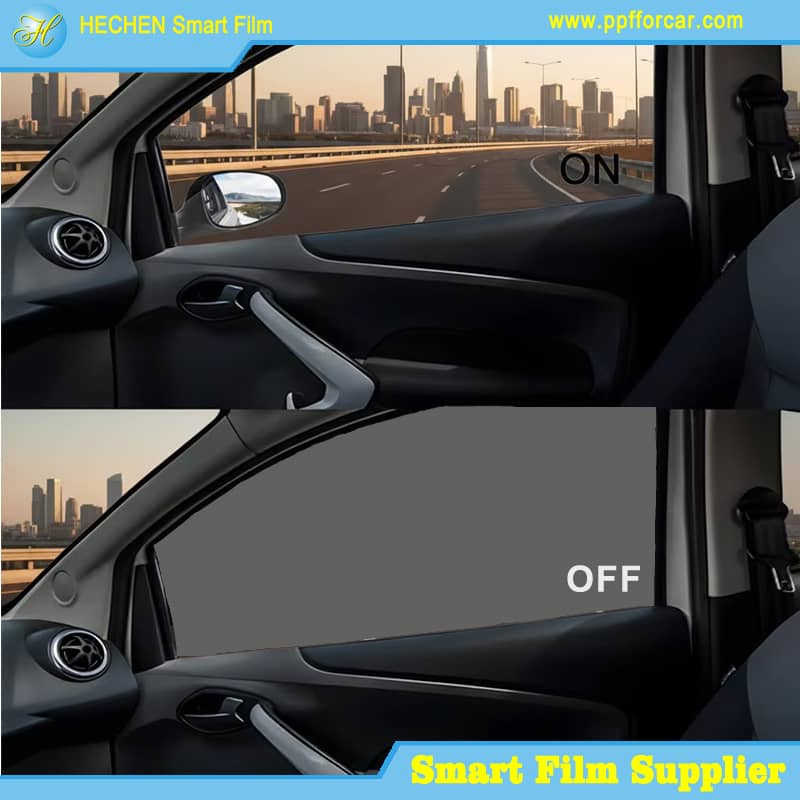
Polymer Dispersed Liquid Crystal technology represents a sophisticated electro-optical material system that enables instantaneous control over light transmission through glass surfaces. In its fundamental form, PDLC automotive film consists of microscopic liquid crystal droplets dispersed within a solid polymer matrix, sandwiched between transparent conductive layers typically coated on polyester substrates. When no electrical current flows through the conductive layers, the liquid crystal droplets are randomly oriented, scattering light in all directions and creating a translucent, opaque appearance. The application of an electrical field—typically 50-100 volts AC—forces these crystals to align uniformly, allowing light to pass through unimpeded and rendering the film transparent.
What distinguishes automotive-grade PDLC from architectural variants is the rigorous performance requirements demanded by vehicle environments. Automotive applications expose materials to extreme temperature fluctuations ranging from -40°C to 110°C, continuous UV radiation, mechanical vibration, and humidity variations that would degrade standard films. Manufacturers have responded with specialized formulations incorporating UV-stable polymers, moisture-resistant edge seals, and liquid crystal compounds engineered to maintain consistent electro-optical performance across this wide temperature range.
Recent innovations have introduced dye-doped PDLC formulations that achieve higher contrast ratios and darker opaque states compared to conventional white-translucent films. These advanced materials can achieve on-state haze below 3 percent while maintaining off-state light transmission under 5 percent, addressing the limitations of earlier generations that could not achieve true blackout conditions.
The Expanding Market for PDLC Automotive Solutions
The global market for PDLC automotive applications has experienced remarkable growth, driven by converging trends in vehicle premiumization, electrification, and consumer demand for customizable interiors. According to market research, the global PDLC smart film for automotive market was valued at approximately USD 560.3 million in 2024, with projections indicating growth to USD 1.21 billion by 2032, representing a compound annual growth rate of 9.7 percent.
The broader category of automotive-grade PDLC dimming film, encompassing both film-only products and integrated glass solutions, reached production volumes of 3,154 thousand square meters in 2024, with average pricing of USD 102 per square meter. Market analysts project this segment to grow from USD 345 million in 2025 to USD 613 million by 2031, achieving a CAGR of 10.1 percent during the forecast period.
Regional market dynamics reveal interesting patterns in adoption and manufacturing. Asia-Pacific dominates global production and consumption, accounting for over 40 percent of worldwide demand, with China, Japan, and South Korea serving as both major manufacturing hubs and significant consumer markets. China alone contributes approximately 60 percent of regional PDLC film consumption, supported by government policies promoting smart transportation solutions and a rapidly growing premium vehicle segment. Europe follows as the second-largest market, driven by stringent emissions regulations that incentivize technologies reducing vehicle energy consumption, while North America maintains strong demand through luxury vehicle adoption and aftermarket installations.
The competitive landscape features a diverse mix of established multinational corporations and specialized manufacturers. Key players include Israel's Gauzy, Japan's TOPPAN Inc., Saint-Gobain, AGC, Polytronix, and DMDisplay, alongside numerous Chinese manufacturers including Shanghai HIUV New Material, Hunan Haozhi Technology, and Shantou Wanshun New Material Group. These companies compete primarily on optical clarity, switching speed, temperature range, and the ability to meet stringent automotive OEM qualification requirements.
Key Applications of PDLC Technology in Modern Vehicles
Panoramic Sunroofs and Glass Roofs
The most widespread and rapidly growing application for PDLC automotive technology is in panoramic sunroofs and fixed glass roofs. Modern vehicle design increasingly features expansive glass surfaces that create open, airy cabin environments, but these same surfaces present challenges in solar heat gain and passenger privacy. PDLC-enabled sunroofs address both concerns by allowing occupants to instantly transition the glass from transparent to opaque at the touch of a button.
Unlike conventional sunshades that require mechanical operation and occupy headroom when deployed, PDLC films integrate seamlessly within the glass laminate, preserving clean interior aesthetics while providing on-demand privacy and glare control. The technology proves particularly valuable in electric vehicles, where reducing air conditioning loads directly translates to extended driving range. Studies indicate that PDLC smart glass can reduce cabin heat by up to 40 percent compared to conventional glazing, with corresponding reductions in HVAC energy consumption of approximately 12 percent.
Luxury vehicle manufacturers have been early adopters, with models from BMW, Mercedes-Benz, and Rolls-Royce featuring PDLC sunroofs as standard or optional equipment. Toyota's Century model, for example, incorporates AGC's Digital Curtain light control glass, demonstrating the technology's positioning at the highest end of the automotive market. As production costs decline and performance improves, the technology is gradually migrating from ultra-luxury segments into premium and mid-range vehicles.
Side Windows and Privacy Glass
Side window applications represent a growing frontier for PDLC technology, offering solutions for both passenger privacy and security. In limousines, executive sedans, and VIP transport vehicles, PDLC-enabled side windows provide instant opacity at the touch of a button, eliminating the need for conventional curtains or blinds while maintaining the ability to see outward when desired.
The commercial vehicle segment presents particular opportunities, with demand for smart partition films in taxis, ride-sharing vehicles, and security transports expected to increase significantly. These applications benefit from PDLC's ability to create private compartments within vehicles, separating drivers from passengers or creating confidential spaces for mobile offices. Market analyses suggest the commercial vehicle segment could see demand growth of 36 percent between 2025 and 2032 for such applications.
Security applications represent a specialized but growing niche, with armored vehicle manufacturers incorporating PDLC technology into windows that can instantly obscure the vehicle interior during security incidents. Newer iterations of PDLC films can integrate with vehicle security systems, automatically activating privacy mode during emergencies or when vehicles are parked in vulnerable locations.
Rear Windows and Rear Privacy
Rear window applications leverage PDLC technology to address both privacy and security concerns. In SUVs and crossover vehicles, rear cargo areas often contain valuable items visible through rear windows, creating security vulnerabilities. PDLC-enabled rear glass allows owners to obscure cargo areas when vehicles are parked while maintaining clear visibility during driving.
Some manufacturers are exploring PDLC applications in rear windshields that can dynamically darken to reduce headlight glare from following vehicles at night, improving driver comfort and safety without requiring manual adjustment of rearview mirrors.
Advanced Driver Assistance Systems Integration
Emerging applications for PDLC automotive technology extend beyond conventional windows into advanced driver assistance systems. Heads-up displays and augmented reality windshields represent promising frontiers where PDLC's rapid switching capability enables new functionality. By selectively opacifying portions of the windshield, PDLC films can create high-contrast projection surfaces for navigation information and safety warnings without obstructing the driver's view of the road.
Recent research has demonstrated PDLC-based glare reduction systems that integrate with light sensors to automatically detect and block oncoming headlight glare. One experimental system achieved 99.85 percent light blocking at one meter distance, reducing 12,080 lux to only 17 lux, with automatic activation beginning at six meters from approaching vehicles. Such systems could significantly enhance night driving safety by dynamically protecting drivers from disabling glare without requiring manual intervention.
Interior Partitions and Reconfigurable Spaces
The development of autonomous vehicles is driving interest in reconfigurable interior spaces where PDLC technology enables dynamic privacy zones. Future autonomous vehicle concepts envision cabins where passengers can create private compartments for work, relaxation, or entertainment simply by activating PDLC partitions and windows. Prototypes from leading automakers suggest that next-generation autonomous vehicles may feature up to 15 square meters of PDLC film per cabin, potentially creating a USD 1.2 billion addressable market by 2032.
Market Drivers Fueling PDLC Automotive Adoption
Electric Vehicle Revolution
The global transition toward electric mobility represents perhaps the most significant driver for PDLC automotive adoption. Electric vehicle manufacturers face unique challenges in maximizing driving range, with cabin climate control representing one of the largest auxiliary loads on battery systems. PDLC smart glass reduces this load by dynamically controlling solar heat gain, allowing vehicles to maintain comfortable cabin temperatures with less air conditioning energy consumption.
Beyond energy efficiency, PDLC technology enables the expansive glass roofs that have become signature design elements for electric vehicles from manufacturers including Tesla, Ford, and numerous Chinese EV startups. These glass surfaces create distinctive vehicle aesthetics while the integrated PDLC films ensure that passenger comfort and privacy are not compromised.
Premiumization and Consumer Demand
Consumer expectations for vehicle interiors have risen dramatically, with features once reserved for ultra-luxury models migrating into mainstream premium segments. Smart glass features now rank among the desired amenities for premium vehicle buyers, with surveys indicating that 68 percent of premium vehicle purchasers consider such technologies important in their buying decisions.
The ability to customize interior environments on demand resonates with consumers seeking personalization and control. PDLC technology delivers this through instant transparency adjustment, enabling drivers and passengers to adapt their surroundings to changing conditions and preferences without mechanical complexity.
Regulatory Drivers
Government regulations worldwide are indirectly supporting PDLC adoption through policies encouraging vehicle energy efficiency and emissions reduction. European Union emissions standards, China's New Energy Vehicle mandates, and tightening fuel economy regulations in North America all create incentives for technologies that reduce vehicle energy consumption. PDLC's contribution to reduced HVAC loads positions it favorably within this regulatory landscape.
Pedestrian safety regulations in Europe and North America are prompting exploration of transparent-hood technologies that would use PDLC films to improve driver visibility of vulnerable road users. While still experimental, such applications demonstrate the expanding scope of PDLC's potential contribution to vehicle safety.
Technological Advancements
Continuous improvements in PDLC film performance are expanding the addressable market for automotive applications. Modern formulations achieve switching speeds under 100 milliseconds, compared to several seconds for early generations, enabling new applications requiring rapid response. Transparency in the activated state has increased from approximately 65 percent to over 80 percent in premium products, while haze levels have decreased to between one and three percent.
Temperature stability has improved dramatically, with automotive-grade films now qualified for continuous operation from -30°C to 110°C, covering the full range of conditions encountered in vehicle environments. Advanced edge-sealing technologies and moisture-resistant constructions ensure long-term reliability, with operational lifespans now exceeding 100,000 switching cycles.
Challenges Limiting Mass Market Adoption
Cost Barriers
Despite recent cost reductions, PDLC automotive technology remains significantly more expensive than conventional glass solutions. Current production costs for automotive-grade films are approximately 12-15 times higher than standard automotive glass on a per-square-meter basis, translating directly to vehicle price points. This cost structure restricts current applications primarily to premium vehicle segments with transaction prices above USD 60,000-80,000.
The cost challenge extends beyond the film itself to include integration expenses. PDLC glass requires dedicated power systems and control electronics that must interface with existing vehicle electrical architectures. For aftermarket installations, retrofitting conventional vehicles often necessitates extensive electrical system modifications, adding USD 3,000-5,000 to installation costs.
Durability Concerns
Automotive environments subject materials to extreme conditions that test the limits of PDLC technology. Prolonged UV exposure can degrade liquid crystal compounds and polymer matrices, leading to performance deterioration over time. Temperature cycling between extreme cold and heat creates mechanical stresses that can cause delamination or edge seal failure.
Field experience has revealed that some PDLC installations experience gradual increases in switching time and minor opacity variations after 3-5 years of service. While manufacturers continue improving formulations and encapsulation techniques, these durability concerns influence specification decisions, particularly for fleet operators and commercial vehicle applications where long-term reliability is paramount.
Performance Limitations
Current PDLC technology cannot achieve complete blackout in the opaque state, with even premium films transmitting five to ten percent of incident light. While sufficient for visual privacy, this residual transmission may be inadequate for applications requiring complete darkness, such as sleeping areas in luxury vehicles or specialized security applications.
Haze in the transparent state, though reduced, remains measurable at one to three percent. For most automotive applications, this level is imperceptible, but it may affect optical clarity in applications like heads-up displays where pristine transparency is essential.
Supply Chain Complexity
The PDLC manufacturing process involves specialized materials and precision production techniques that create supply chain vulnerabilities. Key raw materials including liquid crystal compounds and transparent conductive coatings often face supply shortages and price volatility. The multi-layer extrusion and lamination processes require clean room conditions and extensive quality control, limiting production scalability and contributing to lead times of 6-8 weeks for custom projects.
Geopolitical factors and trade barriers can disrupt material flows, as seen in recent supply chain disruptions affecting specialty chemicals and electronic materials. Manufacturers are working to diversify supplier bases, but the specialized nature of PDLC materials limits sourcing options.
Future Trends and Emerging Opportunities
Integration with Autonomous Vehicle Architectures
The development of fully autonomous vehicles represents perhaps the most significant long-term opportunity for PDLC automotive technology. As driving tasks shift from drivers to vehicles, interior configurations will fundamentally change, with seating arrangements that enable face-to-face conversation, mobile workspaces, and relaxation zones. PDLC technology will enable these reconfigurable spaces by providing on-demand privacy between seating areas and dynamic control over window transparency.
Future autonomous vehicle concepts envision entire cabin surfaces covered with PDLC films that can transition between transparency, privacy, and display modes. When combined with transparent OLED technology, these surfaces could serve as both windows and entertainment displays, fundamentally redefining the relationship between vehicle occupants and their environment.
Smart Surface Integration
The convergence of PDLC technology with other smart surface innovations promises to create multifunctional vehicle interiors. Experimental prototypes integrate touch sensors with PDLC films, enabling gesture control of transparency while maintaining the film's optical switching capability. Other developments combine PDLC with photovoltaic layers that harvest solar energy through windows, with early prototypes achieving 8-10 percent energy conversion efficiency while maintaining acceptable optical performance.
Heads-up displays and augmented reality applications represent near-term opportunities for PDLC integration. By creating selectively opacified regions within windshields, PDLC films can serve as high-contrast projection surfaces for navigation information, safety alerts, and entertainment content without obstructing the driver's view of the road.
Sustainability and Circular Economy
As automotive manufacturers commit to ambitious sustainability targets, the environmental footprint of all vehicle components faces increasing scrutiny. PDLC manufacturers are responding with lead-free formulations that eliminate hazardous substances and with designs that facilitate recycling at end of vehicle life. The European Chemicals Agency's restrictions on lead in electronic components have accelerated development of alternative formulations that maintain performance while improving environmental compatibility.
The energy-saving benefits of PDLC glass contribute to vehicle sustainability credentials throughout the use phase. For electric vehicles, every kilowatt-hour saved through reduced HVAC loads extends range and reduces the carbon footprint associated with electricity consumption. As the grid continues decarbonizing, these operational benefits will increase in significance.
Cost Reduction Trajectory
Manufacturing improvements and economies of scale are gradually reducing PDLC costs, with prices declining approximately 7 percent annually in recent years. As production volumes increase to meet growing automotive demand, this cost reduction trajectory is expected to continue, potentially bringing PDLC technology within reach of mass-market vehicle segments.
Innovations in manufacturing processes, including roll-to-roll production improvements and more efficient materials utilization, contribute to cost reduction. The development of self-adhesive film variants has simplified installation and reduced deployment costs by approximately 25 percent compared to traditional laminated solutions, expanding the addressable market for retrofit applications.
Regional Market Evolution
While developed markets in North America and Europe continue driving premium vehicle adoption, emerging markets present significant long-term growth opportunities. China's position as both the world's largest automotive market and a major PDLC manufacturing hub creates unique dynamics, with domestic manufacturers gaining market share through cost-competitive offerings and government support for advanced material development.
India and Southeast Asia represent frontier markets where growing middle-class populations and increasing vehicle ownership could eventually support significant PDLC adoption. However, price sensitivity in these markets means that widespread adoption awaits further cost reductions and the migration of technology from premium to volume segments.
Conclusion
PDLC automotive technology has evolved from a novel concept into a commercially viable solution addressing genuine market needs for privacy, comfort, and energy efficiency in modern vehicles. The technology's ability to instantly transform glass from transparent to opaque at the touch of a button, combined with its contributions to thermal management and UV protection, positions it well for continued growth alongside the broader trends of vehicle electrification, premiumization, and autonomous development.
Current market adoption, concentrated in panoramic sunroofs and luxury vehicle applications, represents only the beginning of PDLC's potential in automotive design. As manufacturing costs decline through economies of scale and process improvements, as durability continues improving through advanced materials development, and as vehicle architectures evolve to accommodate reconfigurable interiors, PDLC technology appears destined to migrate from premium specialty feature to mainstream automotive component.
The convergence of PDLC with other smart surface technologies—touch sensitivity, photovoltaic energy harvesting, and transparent displays—points toward a future where vehicle glass becomes an active participant in the driving experience rather than a passive transparent barrier. For manufacturers willing to invest in this technology and designers creative enough to exploit its capabilities, PDLC offers a powerful tool for differentiating vehicles and creating interior experiences that delight customers while contributing to sustainability objectives.
The road ahead for PDLC automotive technology presents both challenges and opportunities. Cost reduction, durability improvement, and performance enhancement remain ongoing imperatives, but the trajectory is clear: smart glass enabled by PDLC films will play an increasingly important role in shaping the vehicles of tomorrow, transforming how we experience and interact with automotive environments.
For more about PDLC Automotive: Revolutionizing Vehicle Glass with Smart Tinting Technology. Everything you need to know, you can pay a visit to Smart Film For Car - PDLC Smart Film Manufacturer And Supplier for more info.


评论
发表评论