Protect Your Interior: How Smart Glass Reduces UV Damage in Cars
The modern automobile is a marvel of engineering, but its greatest vulnerability might be its biggest selling point: the window. Expansive windshields and panoramic sunroofs flood the cabin with light, creating an open and airy feel. However, this architectural advantage comes with a hidden cost. Every time a vehicle is parked under the sun, a silent assault takes place. Ultraviolet (UV) radiation and solar heat work in tandem to degrade, discolor, and destroy the interior from the inside out.
For decades, the primary defense against this degradation was aftermarket window tinting—a passive film applied to the glass. But as automotive technology has evolved, so has the solution. Enter Smart Glass (also known as switchable glass or SPD-SmartGlass). Originally developed for luxury architecture and aviation, this technology is migrating into the automotive sector, offering a dynamic, intelligent solution to the age-old problem of UV damage.
This article explores the science of solar degradation, the limitations of traditional glazing, and the technical mechanisms by which Smart Glass acts as an active shield, preserving vehicle aesthetics, structural integrity, and passenger health.
The Invisible Enemy: Understanding UV and Solar Damage
To appreciate the protective capabilities of Smart Glass, one must first understand the enemy. The sun emits a broad spectrum of electromagnetic radiation. While we can see visible light (and feel infrared heat), it is the ultraviolet spectrum that causes the most insidious damage to automotive interiors.
UV radiation is categorized into three main types based on wavelength: UVA, UVB, and UVC. Fortunately, the Earth's atmosphere blocks almost all UVC. However, UVA and UVB penetrate freely.
UVB Rays: These are high-energy rays responsible for sunburns. While largely blocked by standard automotive glass, the small amount that enters contributes to the fading of fabrics and dyes over time.
UVA Rays: These longer-wavelength rays penetrate deeper than UVB. Standard automotive glass is less effective at blocking UVA, allowing them to bombard the dashboard, steering wheel, and leather seats relentlessly.
The result is a photochemical process known as photodegradation. When UV photons strike the polymers and dyes inside a car, they have enough energy to break chemical bonds.
Fading: The chromophores (the parts of a molecule responsible for its color) are destroyed. This causes reds to turn pink, blacks to turn purple, and vibrant colors to fade to dull grays.
Cracking and Embrittlement: The polymer chains in plastics, such as those in dashboards and trim, are broken down. This causes the material to lose its plasticizers, leading to a brittle, cracked surface that feels sticky or dry to the touch.
Delamination: In leather seats, the UV rays break down the topcoat and the collagen fibers underneath, leading to peeling and cracking.
Beyond UV, Infrared (IR) radiation contributes to heat buildup. This "greenhouse effect" exacerbates chemical degradation, as heat speeds up every chemical reaction, accelerating the fading and embrittlement process.
Traditional Defenses: The Limits of Tint and Laminated Glass
Standard automotive glass offers a baseline level of protection, but it is insufficient for long-term preservation.
Laminated Glass (Windshields): Modern windshields are made of two layers of glass with a polyvinyl butyral (PVB) interlayer. This interlayer is excellent at blocking most UVB rays and a significant portion of UVA. However, side and rear windows are typically made of tempered glass, which offers far less UV protection unless specially treated.
Aftermarket Window Tint: Dye-based and carbon films provide improved protection. Ceramic tints are even better, blocking substantial UV and IR without darkening the glass significantly. However, these are static solutions. Once applied, the light transmission is fixed. This creates a compromise: a dark tint protects the interior but reduces visibility at night and may violate local "window tint laws." Furthermore, they are susceptible to bubbling, peeling, and discoloration over time.
The Active Solution: How Smart Glass Technology Works
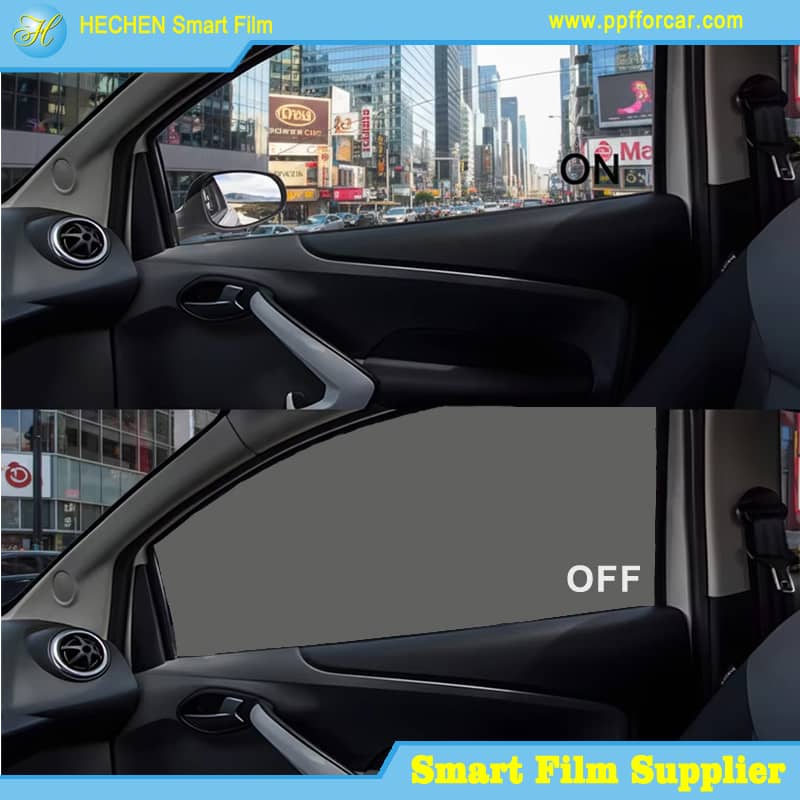
Smart Glass, specifically Suspended Particle Device (SPD) technology, represents a paradigm shift. Instead of a passive filter, it is an active, electronic window that allows drivers to instantly control the amount of light and heat entering the vehicle.
The core of the technology lies within the glass itself—or more accurately, within a thin film laminate sandwiched between layers of glass and plastic. Here is the technical breakdown of how it operates:
The Construction:
A typical automotive Smart Glass panel is a multilayered composite:
Outer Glass Layer: Durable tempered or annealed glass.
Conductive Coating: A transparent, electrically conductive material (usually Indium Tin Oxide - ITO) applied to the inner surface of the glass.
SPD Film: The active layer. This is a suspension of microscopic, light-absorbing particles—typically polyhalide crystals—encased in a liquid suspension between two sheets of polyester film.
Second Conductive Coating: Another layer of ITO.
Inner Glass or Plastic Layer: Protects the film stack.
The Mechanism:
The magic happens at the molecular level. The microscopic particles in the SPD film are rod-like and randomly oriented. In their default "off" state, they block light because they are randomly positioned. When an electrical voltage is applied, the particles align, allowing light to pass through.
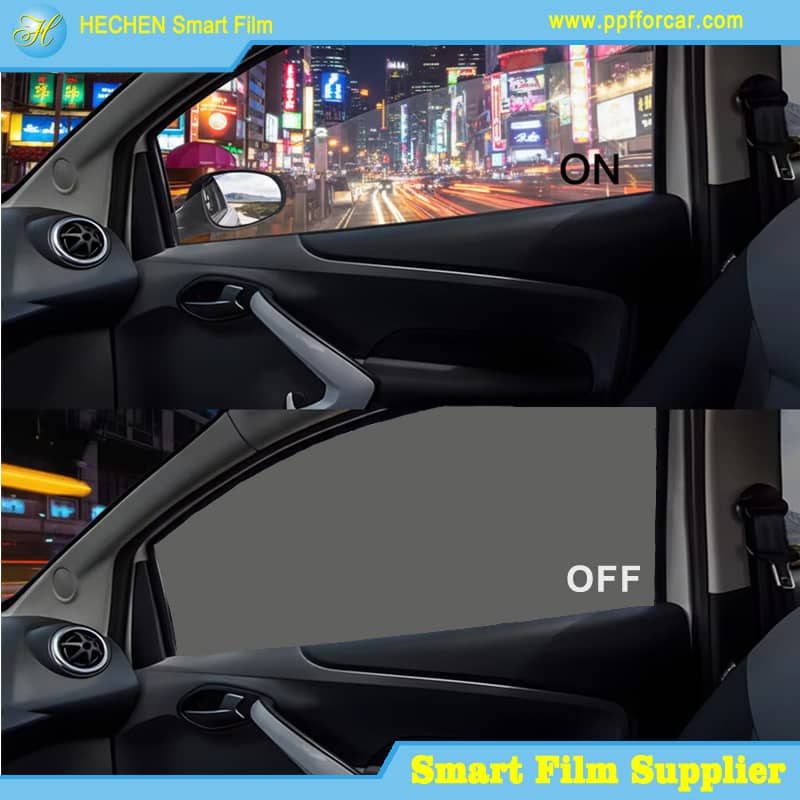
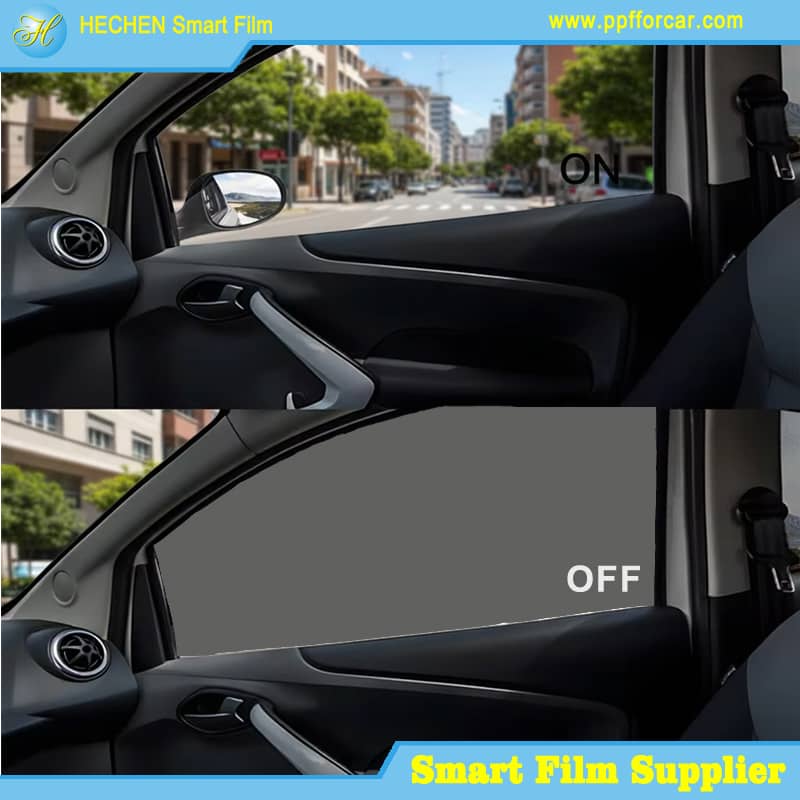
Dark State (Voltage Off): With no voltage applied, the particles are in a state of constant, random motion (Brownian motion). Light photons hit these randomly oriented particles and are absorbed or scattered. This results in the glass appearing dark blue, black, or opaque. In this state, it blocks up to 99.5% of visible light.
Light State (Voltage On): When an AC voltage is applied to the conductive coatings, creating an electric field across the film, the rod-like particles align in parallel to the direction of the field. When aligned, light can pass through the suspension with minimal obstruction, making the glass instantly transparent.
Variable Tint: Crucially, by adjusting the voltage level, the alignment of the particles can be controlled. This allows for infinite variability between the fully dark and fully clear states, letting the driver choose the exact level of tint desired.
The Protective Shield: Reducing UV Damage with Smart Glass
While the novelty of "magic windows" that change color on demand is appealing, the protective benefits for the vehicle's interior are profound. Smart Glass acts as a comprehensive barrier against the three main agents of degradation: UV radiation, Visible Light, and Infrared Heat.
1. The UV Fortress: Blocking 99.9% of Harmful Rays
The primary mechanism for interior protection is the inherent UV blocking capability of the Smart Glass stack. The combination of materials used is exceptionally hostile to UV photons.
The Glass Layers: Automotive glass naturally blocks some UVB.
The PET Layers: The polyester films that contain the SPD emulsion are naturally UV-absorbent.
The SPD Emulsion: The fluid and the particles themselves are designed to absorb light across the spectrum, including UV.
Adhesives: The optical adhesives used to bond the layers together often contain UV inhibitors.
When combined, these layers create a formidable defense. High-quality automotive SPD-SmartGlass blocks more than 99.9% of harmful UVA and UVB radiation. This is functionally equivalent to total blockage. By eliminating the energy source that breaks down chemical bonds, Smart Glass effectively stops photodegradation in its tracks. Leather seats, wooden trim, and dyed fabrics retain their original color and suppleness for the life of the vehicle, rather than fading within a few years.
2. Thermal Management: Slowing the Chemical Clock
As noted earlier, heat accelerates chemical degradation. The Arrhenius equation, a cornerstone of physical chemistry, dictates that reaction rates increase exponentially with temperature. For every 10°C (18°F) rise in temperature, the rate of chemical degradation can roughly double.
Smart Glass is highly effective at rejecting Infrared (IR) radiation—the primary component of solar heat. In its darkest state, SPD glass can block over 99% of IR heat. This capability is dynamic:
On a hot day: The driver can darken the panoramic roof and windows. This reflects and absorbs the IR energy before it enters the cabin, keeping the interior ambient temperature significantly lower.
The Result: By maintaining a cooler cabin, the vehicle slows the "chemical clock." The breakdown of adhesives, the outgassing of plastics (which causes that "new car smell" to turn into a "hot plastic smell"), and the fading of fabrics are all dramatically reduced.
3. Visible Light Control: Preventing "Light Bleaching"
While UV is the most energetic, visible light also contributes to fading—a process known as "light bleaching." Certain pigments are sensitive to the blue and violet end of the visible spectrum. Smart Glass allows for granular control of this.
When parked: The glass can be set to its darkest state (e.g., 1% visible light transmission), virtually eliminating light exposure and protecting the interior like a garage door.
When driving: The glass can be lightened to a legal and safe level (e.g., 5-20% VLT for privacy), or even made nearly clear for night driving.
This dynamic range ensures that the interior is only exposed to the minimum amount of light necessary for visibility, drastically reducing cumulative light exposure over the vehicle's lifetime.
Beyond the Interior: Health and Comfort Benefits
The protective function of Smart Glass extends beyond the dashboard and seats to the occupants themselves.
Skin Protection: With 99.9% UV blockage, the glass provides the equivalent of SPF 1000+ protection. This is crucial for passengers on long road trips, as cumulative UV exposure during driving is a known risk factor for skin cancer on the left side of the body (in left-hand drive countries).
Glare Reduction: By electronically dimming the glass, drivers can instantly combat glare from the sun or headlights at night, reducing eye fatigue and increasing safety.
Thermal Comfort: By blocking IR heat, the HVAC system doesn't have to work as hard to cool the cabin. This not only saves fuel (or battery range in EVs) but also prevents the "radiant heat" effect, where a passenger's face feels hot from the sun even though the air conditioning is on.
Conclusion
As vehicles become more luxurious and incorporate larger glass areas, the need for intelligent protection becomes paramount. Traditional tinting, while effective as a static solution, represents a compromise that cannot adapt to changing conditions. Smart Glass technology, particularly SPD, offers a dynamic, scientifically superior method of preservation.
By blocking over 99.9% of UV radiation, actively managing solar heat load, and providing variable control over visible light, Smart Glass effectively halts the process of photodegradation. It preserves the factory-fresh look of the interior, maintains the structural integrity of plastic and leather components, and protects the health of the occupants.
For automakers and consumers alike, investing in Smart Glass is not just about a cool technological feature; it is an investment in the longevity and resale value of the vehicle. It transforms the window from a point of vulnerability into an active, intelligent shield against the relentless forces of nature.h
For more about the protect your interior: how smart glass reduces UV damage in cars, you can pay a visit to Hechen PDLC Smart Film Manufacturers for more info.


评论
发表评论